Auf einen Blick#
| Frage | Ihr Auftrag |
|---|---|
| Was erstellen Sie? | Zwei Versionen desselben Artefakts. |
| Was vergleichen Sie? | Co-Construction: Ergebnis eines gemeinsam geplanten Ablaufs mit menschlichen Kontrollpunkten. Single Pass (Baseline): Direktantwort ohne gemeinsame Planung und Nachbesserung. |
| Was bleibt gleich? | Auftrag, fachliche Grundlagen, Ergebnisumfang, drei Qualitätsanforderungen, Modell und verfügbare Generierungseinstellungen. |
| Was reichen Sie ein? | Eine ZIP-Datei mit genau drei Dokumenten: beiden Ergebnissen und Nachweisdossier.pdf. |
Ihre Aufgabe#
Zu Beginn dieses Kurses wurde ein generischer Fünf-Phasen-Workflow eingeführt. In den Units 1 und 2 wurde mit Instruction, Context und Alignment das Was spezifiziert – was das Resultat des Workflows sein soll. Demgegenüber vertieft Unit 5 das Wie der Entstehung des erwünschten Outputs. Unit 6 vertieft die Prüfung und Verbesserung des Outputs.
Im Unterricht wurde die Beschreibung einer Firmengeräte-Ausleihe schrittweise entwickelt: drei Prozessschnitte, Zwischenartefakte und Kontrollpunkte, Prüfperspektiven und Rollen, anschliessend Evaluation. Übertragen Sie diese Gestaltungsfragen auf Ihre eigene Aufgabe. Anders als im Unterricht führen Sie hier die Co-Construction zuerst aus. Mindestens zwei Prüfperspektiven insgesamt genügen; zwei Perspektiven je Zwischenartefakt sind keine zusätzliche Vorgabe.
Wählen Sie eine mehrteilige Aufgabe, deren Ergebnis Sie fachlich beurteilen können, etwa eine Entscheidungsvorlage, ein Schulungskonzept oder eine Prozessbeschreibung. Bei seiner Erstellung müssen mindestens drei folgenreiche Entscheidungen verbleiben, die Sie vor der Weiterarbeit prüfen können.
Geprüfte Grundlagen aus früheren Challenges dürfen Sie verwenden. Grenzen Sie umfangreiche Recherche vor Beginn ein. Verwenden Sie nur Material, das Sie im gewählten KI-System verarbeiten und einreichen dürfen.
Der Gesamtprozess#
Die Abbildung ordnet beide Varianten in die fünf Workflow-Phasen ein. Instruktion, Kontext und Alignment bilden eine gemeinsame Grundlage. Sie werden nicht für jeden Durchlauf neu ausgehandelt.
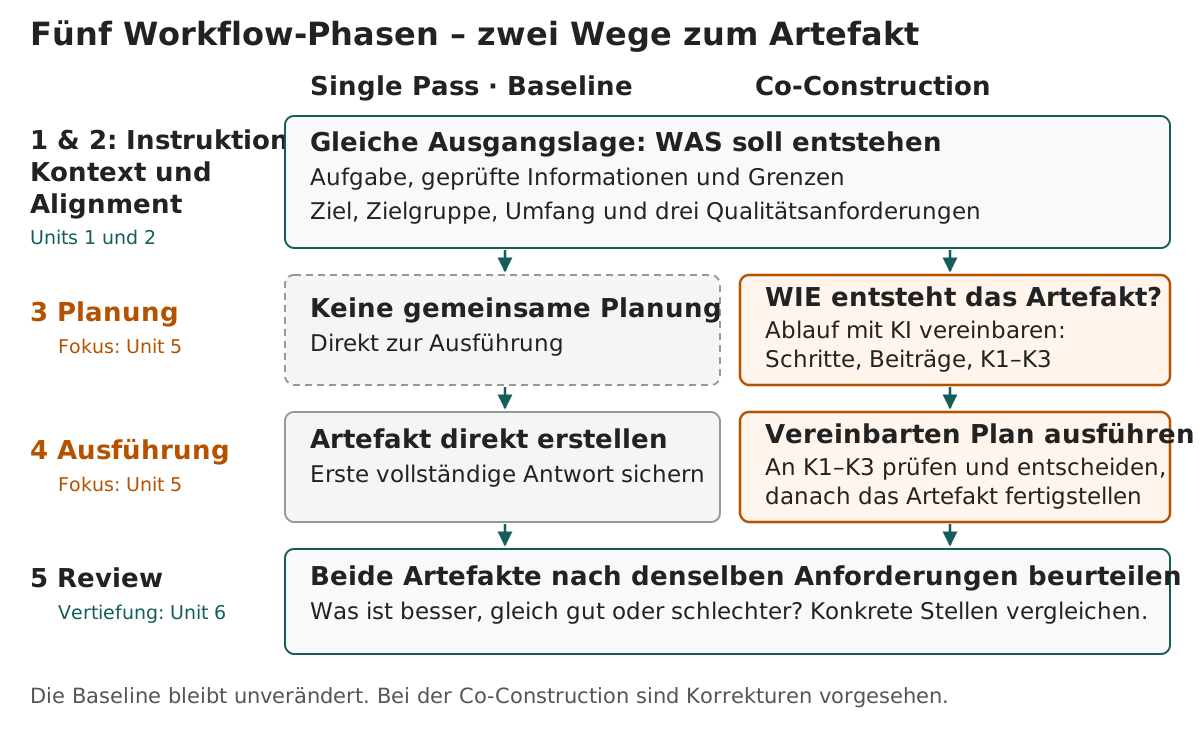
Unit 5 umfasst Phase 3 (Planung) und Phase 4 (Ausführung). Sie planen die Kontrollpunkte und führen sie anschliessend in der Co-Construction aus. Diese Challenge verlangt menschliche Zwischenentscheide bei der Ausführung.
Vorgehen#
Folgen Sie den folgenden sechs Arbeitsschritten, wobei Sie zuerst die Co-Construction und danach den Single Pass in einer isolierten Session ausführen. Betrachten Sie diese Arbeitsschritte als eine Empfehlung. In Abhängigkeit Ihrer Konkretisierung der Challenge ergeben sich vielleicht zielführendere Arbeitsschritte.
1. Gemeinsame Grundlage festlegen#
Halten Sie den geklärten Auftrag fest: Aufgabe, Zielgruppe, Zweck, geprüfte Grundlagen, Grenzen und Ergebnisumfang. Klären Sie offene Fragen zum gewünschten Artefakt bei Bedarf mit der KI. Dieses Auftragspaket erhalten beide Durchläufe unverändert.
Definieren Sie drei Qualitätsanforderungen mit beobachtbaren Merkmalen für «erfüllt», «teilweise erfüllt» und «nicht erfüllt». Halten Sie diese Kriterien, Modell und Einstellungen für beide Durchläufe gleich. Formulieren Sie jetzt auch die direkte Anfrage für den späteren Single Pass und ändern Sie diese danach nicht mehr.
Erfassen Sie laufend grobe aktive Arbeitszeit in Minuten und Anzahl Ihrer KI-Anfragen: getrennt nach gemeinsamer Vorbereitung, Planung, Co-Construction-Ausführung und -Prüfung, Single Pass sowie Vergleich. Jede gesendete Anfrage zählt. Wesentliche Wartezeiten notieren Sie zusätzlich.
2. Arbeitsplan entwickeln und vereinbaren#
Hier bearbeiten Sie Phase 3: Wie entsteht das Artefakt? Entwickeln Sie den Plan im Dialog mit der KI. Lassen Sie einen Ablauf vorschlagen oder Ihren Entwurf hinterfragen. Entscheiden und begründen Sie, was Sie übernehmen, ändern oder weglassen. Genehmigen Sie den Plan vor der Ausführung. Eine begründete Übernahme ohne Änderungen ist zulässig.
Halten Sie den Plan in einer Workflow-Tabelle oder einem Ablaufdiagramm fest:
| Bestandteil | Was Ihr Plan festlegt |
|---|---|
| Schritte und Abhängigkeiten | Was geschieht wann? Welchen akzeptierten Arbeitsstand braucht der nächste Schritt? |
| Beiträge und Rollen | Was übernimmt die KI, was übernehmen Sie? Wer entscheidet worüber? |
| Zwischenartefakte | Welche sichtbaren Arbeitsstände entstehen zur Prüfung und Weitergabe? |
| Drei Kontrollpunkte K1–K3 | Was prüfen Sie wann und anhand welcher Kriterien? Wann geben Sie frei, überarbeiten, springen zurück oder stoppen? |
| Mindestens zwei Prüfperspektiven | Welche unterschiedlichen Blickwinkel nutzen Sie insgesamt, etwa Fachlichkeit und Umsetzbarkeit? |
Begründen Sie für jeden Kontrollpunkt Zeitpunkt, Arbeitsstand, Rollen und Perspektive: Welche spätere Entscheidung hängt davon ab? KI darf zusätzliche Prüfperspektiven beitragen. Sie entscheiden über die Freigabe.
Wählen Sie einen Ablauf, der zur Aufgabe passt. Ist das Artefakt selbst eine Prozessbeschreibung, planen Sie hier, wie Sie diese Beschreibung erarbeiten.
Als Orientierung können Sie Plan–Do–Check–Act (PDCA) verwenden: Vorgehen und Kriterien vereinbaren, Zwischenartefakte erstellen, anhand von Perspektiven und Kriterien prüfen, dann freigeben, überarbeiten oder stoppen. Ein Zwischenartefakt ist der prüfbare Arbeitsstand; ein Kontrollpunkt verbindet diesen mit Prüffrage und Entscheidung. PDCA ersetzt weder die fünf Workflow-Phasen noch Ihre Hypothese und Vorhersage.
Halten Sie vor der Ausführung eine Hypothese und eine überprüfbare Vorhersage fest: Welche Planungsentscheidung sollte warum helfen? Welchen Unterschied erwarten Sie im Artefakt, und woran erkennen Sie ihn?
Beispiel: «Vor der Detailausarbeitung eines Schulungskonzepts prüfe ich an K1 die Zuordnung von Lernzielen zu Übungen. Das sollte Lücken früh sichtbar machen. Ich erwarte im fertigen Konzept eine vollständigere Lernzielabdeckung als beim Single Pass.»
3. Plan ausführen#
Jetzt beginnt Phase 4: das Artefakt erstellen. Starten Sie eine neue Unterhaltung mit Auftragspaket und genehmigtem Plan. Lassen Sie die KI an K1–K3 auf Ihre Entscheidung warten. Prüfen Sie die Zwischenartefakte und geben Sie jeweils nur den akzeptierten Stand weiter.
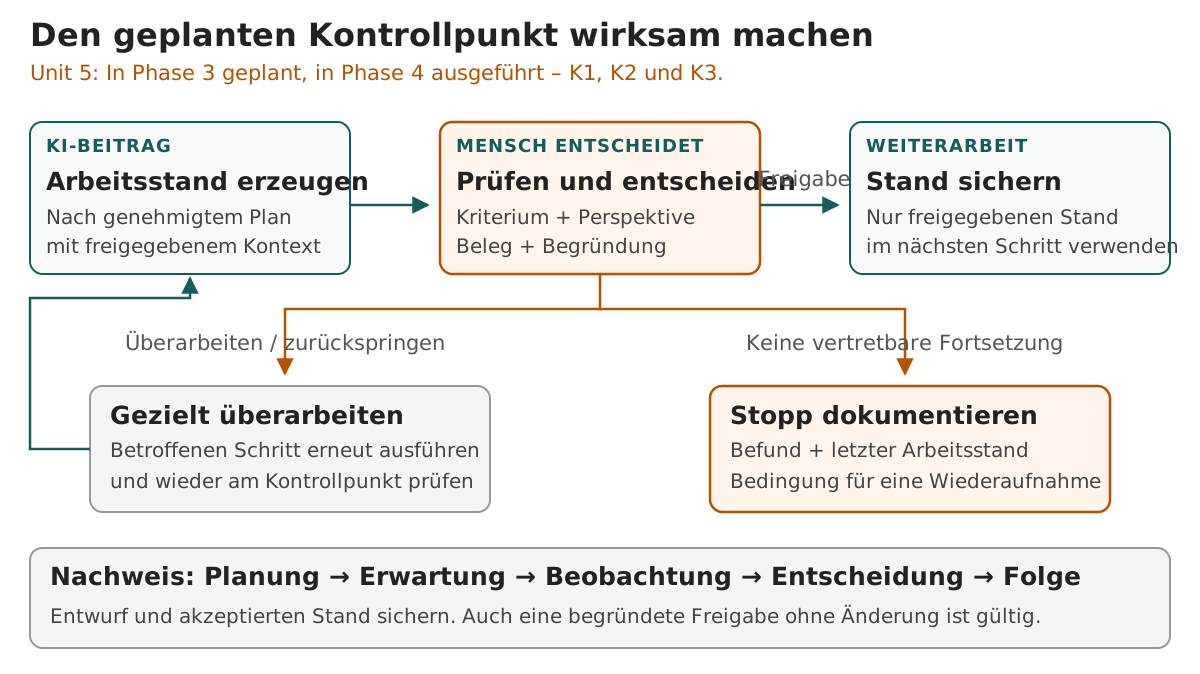
Sichern Sie wichtige Arbeitsstände für Ihren Vergleich. Dokumentieren Sie jeden durchgeführten Kontrollpunkt kompakt im Dossier. Kurze, eindeutig bezeichnete Auszüge oder Abbildungen genügen als Belege:
| Planungsentscheidung und Erwartung | Beobachtung mit Beleg | Ihre Entscheidung und Folge |
|---|---|---|
| Warum prüfen Sie gerade hier? Was erwarten Sie? | Was zeigt eine konkrete Stelle im Arbeitsstand? | Was geben Sie frei, ändern oder stoppen? Warum, und mit welcher Folge? |
Beispiel: «An K1 fehlte eine Übung zu Lernziel 3 (Auszug K1a). Ich liess sie vor der Detailausarbeitung ergänzen (K1b). Im fertigen Konzept ist Lernziel 3 nun abgedeckt.»
Arbeitshilfe aus dem Unterricht: Trennen Sie den aktuell akzeptierten Stand von den Belegen seiner Entstehung und der unveränderten Baseline. Beispielsweise halten Markdown-Dateien in einem Projektordner Plan, Arbeitsstand und Entscheidungen fest. Wiederverwendbare Prüfanweisungen können als Skill organisiert werden; Dateien müssen dem verwendeten System tatsächlich als Kontext zugänglich gemacht werden. Ein bestimmtes Tool, eine Ordnerstruktur oder ein eigener Skill sind keine Anforderung dieser Challenge.
Begründete Freigaben ohne Änderung sind gültig. Halten Sie auch wirkungslose Kontrollen und weitergetragene Fehler fest. Begründen Sie Planänderungen, erhalten Sie den ursprünglichen Plan und kennzeichnen Sie neu hinzugefügte fachliche Informationen.
Lassen Sie nach K3 das Artefakt zusammenführen. Prüfen Sie abschliessend Anforderungen und Umsetzung Ihrer Entscheidungen und dokumentieren Sie nötige Korrekturen. Diese Abschlussprüfung gehört zu Phase 5 und ersetzt keinen Kontrollpunkt. Als Richtwert genügt eine Korrekturrunde je Kontrollpunkt.
Bei fachlich begründetem Abbruch: Prüfen Sie zuerst Überarbeitung oder Rückkehr zu einem früheren Schritt. Ist keine vertretbare Fortsetzung möglich, sichern Sie letzten und zuletzt akzeptierten Stand. Dokumentieren Sie Befund, Stoppentscheidung und Voraussetzung für eine Wiederaufnahme. Markieren Sie spätere Kontrollpunkte als «nicht durchgeführt». Zeitverbrauch allein genügt als Begründung nicht. Der Single Pass bleibt erforderlich.
4. Single Pass durchführen#
Starten Sie eine neue, getrennte Unterhaltung mit dem ursprünglichen Auftragspaket und der vorab fixierten direkten Anfrage. Fordern Sie das fertige Artefakt direkt an, ohne gemeinsam einen Ablauf zu planen.
Plan, Zwischenartefakte, Entscheidungen und Ergebnis der Co-Construction dürfen auch über Projektkontext oder gespeicherte Erinnerungen nicht verfügbar sein. Sichern Sie die erste vollständige Antwort unverändert. Sie wird beurteilt, aber nicht nachgebessert. Stellen Sie keine korrigierenden Folgefragen.
5. Die beiden Artefakte vergleichen#
Beurteilen Sie beide Artefakte selbst anhand der drei vorab festgelegten Qualitätsanforderungen. Was ist konkret besser, gleich gut oder schlechter? Belegen Sie Ihr Urteil mit Stellen aus beiden Ergebnissen. Ein zusätzliches KI-Urteil ist optional und muss von Ihnen geprüft werden.
| Anforderung | Co-Construction: Urteil und Beleg | Single Pass: Urteil und Beleg |
|---|---|---|
| 1 | erfüllt / teilweise / nicht erfüllt – mit konkreter Stelle | erfüllt / teilweise / nicht erfüllt – mit konkreter Stelle |
| 2 | … | … |
| 3 | … | … |
Ergänzen Sie den Qualitätsvergleich um:
- Steuerbarkeit: Welche Entscheidungen konnten Sie durch den Plan frühzeitig beeinflussen? Welche blieben beim Single Pass bis zum Ergebnis verborgen? Zeigen Sie Nutzen oder Probleme an Ihren Kontrollpunktbelegen.
- Aufwand: Vergleichen Sie protokollierte Zeiten und KI-Anfragen. War der Nutzen den Aufwand wert? Was könnte bei Wiederverwendung des Plans entfallen?
Der bereitgestellte Evaluationskatalog (Metrics.xlsx) kann Sie zusätzlich unterstützen; die Anleitung erklärt Eingaben und Interpretation. Er erfasst fachliche Qualität, Anforderungsabdeckung, Transparenz, gewichtete Fehlerpunkte und Zeit. Seine fünf Werte ersetzen weder Ihre drei Qualitätsanforderungen noch das Aufwandsprotokoll. Die Spalte «Anzahl Fehler» enthält gewichtete Punkte; leere Eingaben können bereits Nullwerte erzeugen. Übernehmen Sie bei Bedarf relevante Befunde ins Dossier, ohne die Arbeitsdatei zusätzlich einzureichen.
Bei Abbruch: Beurteilen Sie nur vorhandene Teile. Kennzeichnen Sie Fehlendes als «nicht beurteilbar – Lauf abgebrochen». Prüfen Sie, ob das erkannte Problem auch im Single Pass auftritt.
6. Schlussfolgerung und Planungsregel ableiten#
Beantworten Sie im Dossier vier Fragen:
- Beobachtung: Welche Unterschiede stützen Ihre Vorhersage, welche widersprechen ihr?
- Erklärung: Welche Planungsentscheidungen erklären die Unterschiede plausibel? Nutzen Sie Ihre Kontrollpunktbelege.
- Grenzen: Was bleibt unsicher? Sie vergleichen einen ganzen Prozess einschliesslich zusätzlicher Interaktion und Korrekturen, nicht Planung allein. Berücksichtigen Sie auch KI-Schwankungen, Ihre wachsende Aufgabenkenntnis sowie hinzugefügte Informationen oder einen Abbruch.
- Transfer: Wann würden Sie den Plan wiederverwenden, vereinfachen oder einen Single Pass wählen?
Leiten Sie eine Regel ab: «Bei Aufgaben mit … plane ich vor … einen Kontrollpunkt, an dem ich … entscheide. Das lohnt sich, wenn … .»
Artefakte#
Reichen Sie eine ZIP-Datei mit genau drei Dokumenten ein:
| Bestandteil | Inhalt |
|---|---|
Co-Construction-Ergebnis.pdf oder .md |
Abschliessende geprüfte Fassung. Bei begründetem Abbruch reichen Sie den letzten Arbeitsstand ein und kennzeichnen ihn klar als unvollständig. |
Single-Pass-Ergebnis.pdf oder .md |
Unveränderte erste vollständige Direktantwort. |
Nachweisdossier.pdf |
Ungefähr vier bis sechs Seiten inklusive Tabellen und kurzen Belegen. Dokumentieren Sie Auftrag und Kriterien, den genehmigten Plan mit Begründungen, die ursprüngliche Hypothese und Vorhersage sowie Kontrollpunktbelege und Planänderungen. Ergänzen Sie Ergebnisvergleich, Aufwand, Grenzen und Planungsregel. Bei Abbruch kommt der Stoppnachweis hinzu. |
Wählen Sie für jedes Ergebnis ein gut lesbares, zum Artefakt passendes Format. Das Dossier reichen Sie als PDF ein. Kurze Belege stehen direkt darin. Chatverläufe, Promptsammlungen, Arbeitsdateien und ein separater Beleganhang gehören nicht zur Abgabe.
Evidenz und Bestehen#
Die Challenge ist bestanden, wenn alle folgenden Kriterien erfüllt sind:
- Beide Durchläufe nutzen dieselbe geklärte Grundlage. Die getrennt erzeugte Direktantwort liegt unverändert vor.
- Der vorab vereinbarte Plan enthält drei begründete Kontrollpunkte, mindestens zwei Prüfperspektiven, klare Beiträge und eine überprüfbare Vorhersage.
- Belege machen Ihre Planungsentscheidungen, Prüfungen und deren Folgen nachvollziehbar.
- Der Vergleich nutzt alle drei Qualitätsanforderungen, prüft die Vorhersage und ordnet Steuerbarkeit sowie protokollierten Aufwand ein.
- Sie formulieren Vergleichsgrenzen und eine beleggestützte Planungsregel.
- Beide Ergebnisdokumente und das Dossier liegen vor.
Bei begründetem Abbruch gemäss Schritt 3 ersetzen Arbeitsstand und Stoppnachweis das fertige Ergebnis und die ausstehenden Kontrollpunktbelege. Die übrigen Anforderungen bleiben bestehen.
Eine Verbesserung ist keine Bestehensbedingung. Auch Gleichstand, Verschlechterung oder ein begründeter Abbruch sind gültige Ergebnisse.