Auf einen Blick#
| Frage | Ihr Auftrag |
|---|---|
| Was erstellen Sie? | Zwei Fassungen eines mehrteiligen Dokuments für eine bestimmte Zielgruppe und Verwendung. |
| Was vergleichen Sie? | A: die erste Direktantwort. B: das Ergebnis eines Fünf-Phasen-Vorgehens mit geprüften Grundlagen und mindestens einer begründeten Verbesserung. |
| Was bleibt gleich? | Dokumentart, Aufgabe, Zielgruppe, Verwendungszweck, angestrebte Wirkung und die vier Vergleichskriterien. Nutzen Sie nach Möglichkeit dasselbe Modell. |
| Was reichen Sie ein? | Eine ZIP-Datei mit Direktantwort.pdf, Fünf-Phasen-Artefakt.pdf und Nachweisdossier.pdf. |
Ihre Aufgabe#
Wählen Sie ein gehaltvolles Dokument, etwa ein Tutorial, einen Branchenbericht oder eine Empfehlung an die Geschäftsleitung. Es soll mehrere zusammenhängende Teile haben und auf Informationen beruhen, die sich ausserhalb eines LLMs überprüfen lassen.
Bestimmen Sie, für wen das Dokument gedacht ist, wozu es dient und was es bewirken soll. Eine mögliche Wirkung ist besseres Verständnis, eine fundierte Entscheidung, eine konkrete Handlung, angemessenes Vertrauen oder die erfolgreiche Ausführung einer Aufgabe.
Der Gesamtprozess#
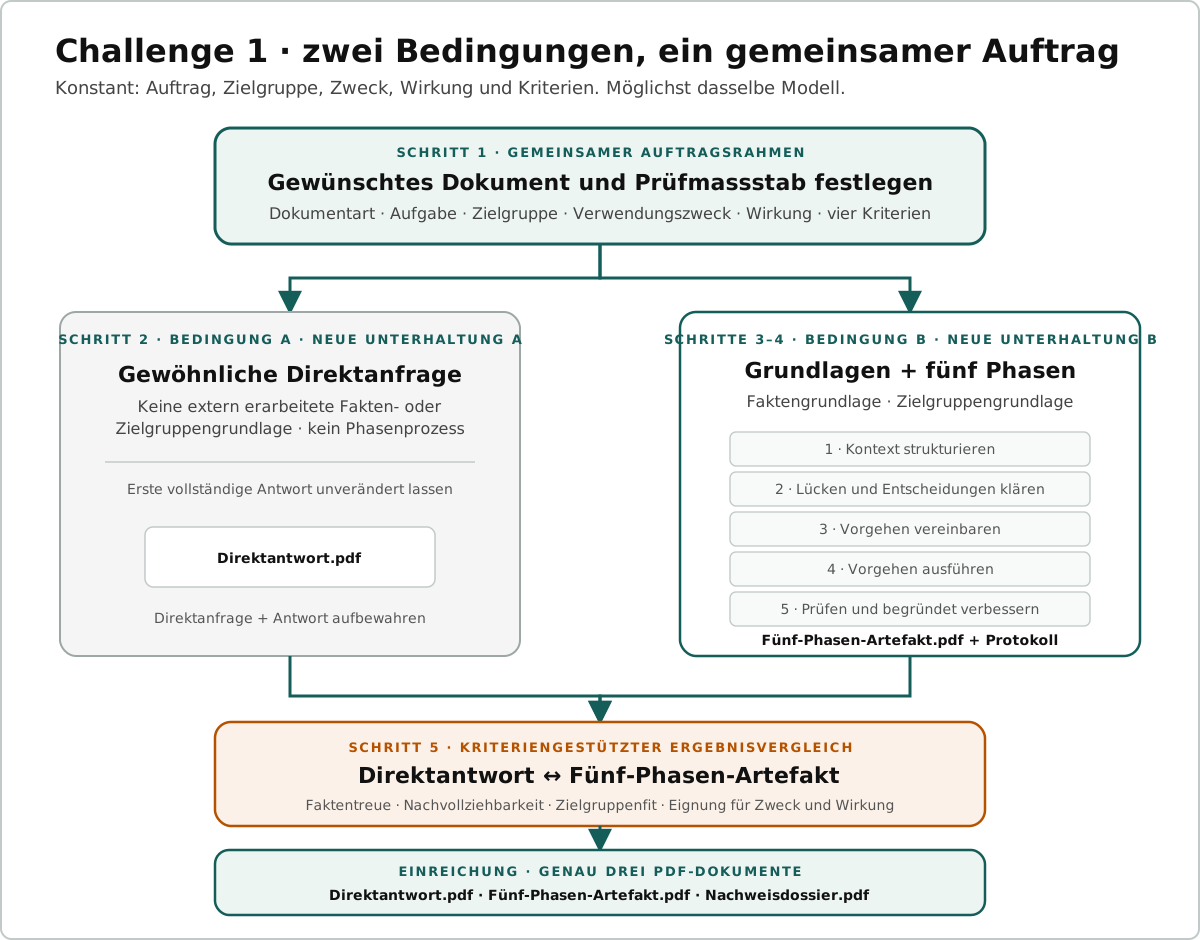
Die fünf Schritte der Abbildung führen durch die Challenge. Die fünf Phasen gehören zu Schritt 4 und beschreiben die Zusammenarbeit in Bedingung B.
Sie vergleichen das vollständige strukturierte Vorgehen mit der Direktanfrage. Daraus lässt sich nicht ableiten, welche einzelne Grundlage oder Phase einen Unterschied verursacht hat.
Vorgehen#
Arbeiten Sie in einer Chat-Anwendung im Browser ohne Dateizugriff. Beginnen Sie für A und B je eine neue Unterhaltung. Übertragen Sie keine frühere Unterhaltung zwischen den Bedingungen.
Gemeinsamen Auftrag festlegen
Halten Sie Dokumentart, Aufgabe, Zielgruppe, Verwendungszweck und gewünschte Wirkung fest. Diese Angaben bilden den Auftragsrahmen. Legen Sie dazu die vier Vergleichskriterien fest:
- Fachliche Richtigkeit: Stimmen die Aussagen mit geprüften externen Informationen überein?
- Nachvollziehbarkeit: Lassen sich wichtige Aussagen und ihre Grundlagen nachvollziehen?
- Zielgruppeneignung: Passen Inhalt, Sprache und Darstellung zur Zielgruppe?
- Zweck und Wirkung: Eignet sich das Dokument für die vorgesehene Verwendung und Wirkung?
Halten Sie diesen Rahmen in A und B gleich. Nur wenn die Aufgabe unlösbar oder unzulässig ist, dürfen Sie ihn ändern. Dokumentieren Sie den Grund und beginnen Sie beide Bedingungen neu.
Bedingung A – Direktantwort erstellen
Stellen Sie in einer neuen Unterhaltung A eine gewöhnliche direkte Anfrage zum festgelegten Auftrag. Geben Sie keine vorbereitete Fakten- oder Zielgruppengrundlage und kein strukturiertes Vorgehen mit.
Bewahren Sie die Anfrage und die erste vollständige Antwort unverändert auf. Stellen Sie keine korrigierenden Folgefragen. Speichern Sie die Antwort als
Direktantwort.pdf.Grundlagen für B erarbeiten
Recherchieren Sie ausserhalb des hauptsächlich verwendeten Sprachmodells:
- Faktengrundlage: relevante Aussagen, Daten, Originalquellen und Unsicherheiten;
- Zielgruppengrundlage: Vorwissen, Bedürfnisse, mögliche Einwände, passende Sprache und gewünschte Reaktion.
Öffnen und prüfen Sie die Originalquellen selbst. Auch KI-Zusammenfassungen müssen auf diese Quellen zurückführbar sein. Entfernen Sie Unnötiges, Wiederholungen sowie nicht autorisierte, persönliche oder sensible Angaben. Verwenden Sie diese Grundlagen nur in B.
Bedingung B – Fünf-Phasen-Vorgehen durchführen
Beginnen Sie eine neue Unterhaltung B. Fügen Sie den Auftragsrahmen und die geprüften Grundlagen ein. Durchlaufen Sie diese fünf Phasen:
- Kontext ordnen: Nützliche Grundlagen zusammenstellen, Unnötiges ausschliessen.
- Lücken und Entscheidungen klären: Offene oder mehrdeutige Punkte aufdecken und selbst entscheiden.
- Vorgehen vereinbaren: Plan, Schritte oder Meilensteine prüfen und vor der Ausführung anpassen.
- Vorgehen ausführen: Das Dokument anhand des vereinbarten Kontexts und Plans erstellen.
- Prüfen und verbessern: Das Ergebnis mit Auftrag, Grundlagen und Kriterien abgleichen. Mindestens eine begründete Verbesserung umsetzen und prüfen.
Notieren Sie zu jeder Phase kurz Erwartung, Beobachtung und Ihre Entscheidung. Dieses Fünf-Phasen-Protokoll gehört ins Nachweisdossier. Speichern Sie das geprüfte und verbesserte Dokument als
Fünf-Phasen-Artefakt.pdf.Ergebnisse vergleichen
Beurteilen Sie beide Fassungen anhand der vier Kriterien aus Schritt 1. Belegen Sie Unterschiede oder begründete Übereinstimmungen mit Textstellen, Quellen oder Gestaltungsmerkmalen.
Beispiel für einen Beleg: «A nennt eine Zahl ohne Quelle. B verweist auf die geprüfte Originalstatistik; Zahl und Bezugsjahr stimmen überein.» Ein solcher Beleg stützt die Beurteilung der Nachvollziehbarkeit, aber noch keine Aussage über die Wirkung auf die Zielgruppe.
Artefakte#
Reichen Sie eine ZIP-Datei mit genau drei PDFs ein:
Direktantwort.pdf
Die unveränderte erste vollständige Antwort aus A.
Fünf-Phasen-Artefakt.pdf
Das geprüfte Dokument aus B mit mindestens einer begründeten Verbesserung.
Nachweisdossier.pdf
Ein kompaktes Dokument mit:
- Auftragsrahmen, Direktanfrage und Hinweis auf die unveränderte Antwort;
- Fakten- und Zielgruppengrundlage mit Herkunftsangaben;
- Fünf-Phasen-Protokoll: Erwartung, Beobachtung und Entscheidung je Phase;
- umgesetzter Verbesserung und Begründung;
- Vergleich nach den vier Kriterien, jeweils mit Belegen;
- eigener Schlussfolgerung: Was hat das vollständige Vorgehen verändert? Was bleibt unsicher? Was übernehmen oder ändern Sie bei einer ähnlichen Aufgabe?
Evidenz und Bestehen#
Die Challenge ist bestanden, wenn:
- beide Fassungen zum selben festgehaltenen Auftragsrahmen gehören;
- A unverändert bleibt und nur B die extern erarbeiteten, geprüften Grundlagen erhält;
- alle fünf Phasen mit Erwartung, Beobachtung und Entscheidung dokumentiert sind;
- B mindestens eine umgesetzte und begründete Verbesserung enthält;
- der Vergleich alle vier Kriterien mit konkreten Belegen abdeckt;
- Ihre Schlussfolgerung aus diesen Beobachtungen folgt;
- die ZIP-Datei genau die drei verlangten PDFs enthält.
Optional#
Testen Sie die gewünschte Wirkung mit geeigneten Zielpersonen. Halten Sie deren Reaktionen im bestehenden Nachweisdossier fest.